

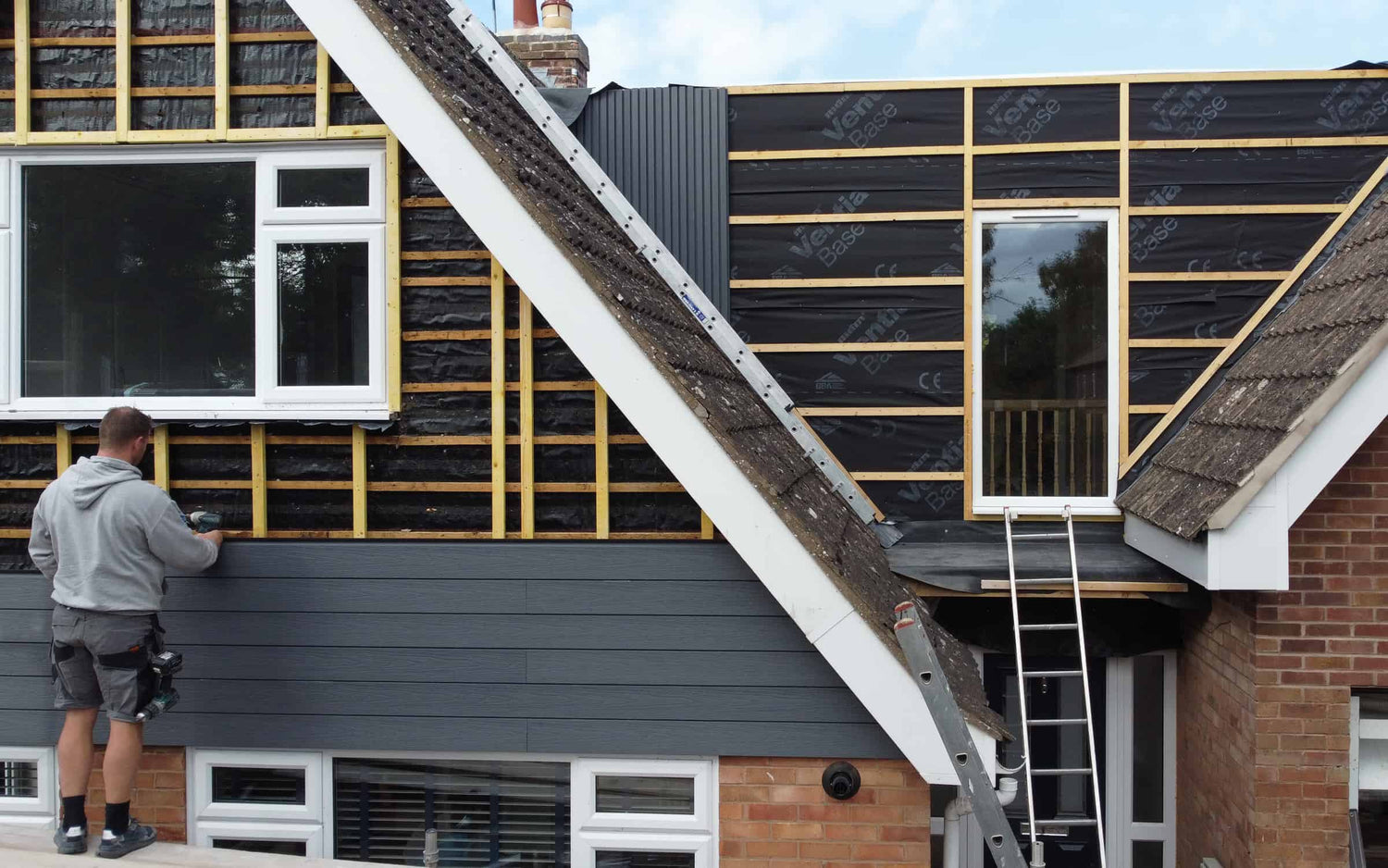
A NeoTimber® guide to installing composite cladding in high wind areas.
In other, more windy places around the world, weatherboard or timber cladding has a negative reputation for being damaged in high winds. When nails loosen, strong winds can get in between the boards and this can cause the boards to be pulled away from the wall. Composite cladding is designed to emulate timber cladding in looks and function, but is built stronger and more securely. Nevertheless, there are still some points you need to consider when choosing and installing composite cladding for high wind areas. Installing composite cladding in high-wind areas requires careful planning and secure fixing to ensure long-lasting durability and safety. Let’s take a look...
Always Follow Health & Safety Guidelines
Wind is not something which normally affects us when we are working on the ground, but wind speeds can increase dramatically even just 10 or 15 feet above the ground. This is because air travels faster at these levels.
For this reason, it is wise to familiarise yourself with the "Working at Height Regulations of 2005". This is a useful piece of composite cladding pre-installation advice, and government legislation for corporate bodies which stipulates safety equipment, anchoring and best practice when working at height but offers a general overview which may be beneficial to DIY and professional installers alike.

Check The Weather Forecast
Before commencing any work at height, check local forecasts or visit the metoffice.gov.uk. As a general rule, you should not attempt any work at height once wind speeds exceed 22-23 mph. If ground wind speeds are predicted to exceed 23mph then gusts are likely to be up-to-35 mph.
This being the case, wait until the winds have died down before commencing with any work at height. We all have a finite amount of spare time to undertake composite cladding projects, but rushing a job, especially when conditions are far from favourable, is to be avoided.

Take Care When Installing At Height
Windy conditions can occur even in built up areas as wind speed up a ladder can be up to twice the speed at ground level in a city centre. For even a modest townhouse, a triple ladder should be used to ensure a safe pitch. Whenever using a ladder, a non-slip surface should be chosen to place the ladder on leaning against a firm surface.
On particularly windy days, a second person should foot the ladder, to give extra stability. Additionally, you can tie the top of the ladder to a drainpipe or similar fixing to prevent the ladder from sliding away from the wall. Where possible, NeoTimber® always recommends using scaffolding in order to create a solid foundation.

Fixing Cladding In A Windy Region
Because of the potential issues surrounding installing cladding in high wind areas, some homeowners are reluctant to consider it for the exterior of their own houses. Nevertheless, even homes in the extreme northern hemisphere use timber cladding. They are able to achieve this by fixing to narrower joist centres, which helps to give cladding a stronger anchorage.
This technique using narrower joist centres is the same when installing composite cladding for high wind areas. Adding extra battens to create a 400mm joist spacing, instead of a 500mm spacing, will provide a more secure subframe solution on which to attach your composite cladding boards. More joists essentially means more fixing points along the length of the cladding (be sure to account for this when calculating your cladding material requirements).